
Gar-Dang
Guide Service
The Catfish
Heart of the River
There’s something special about catfish in Texas. They’re not flashy, they’re not prehistoric like the gar — but they’re the heartbeat of our waters. Every old-timer in Southeast Texas has a catfish story, and most of us grew up with a rod in the mud, waiting for that slow pull and heavy bend that means supper’s on the line.
Around here, catfish are more than just a catch — they’re part of our way of life.
🐟 A Little History
Before there were guides or fancy gear, folks along the Trinity and Liberty Rivers were running trotlines, setting juglines, and catching catfish by feel. It was how families fed themselves. These fish have always been the steady providers — strong, dependable, and full of fight.
Over time, the tradition stuck. Whether it’s a bank line under the stars or a rod in hand at dawn, catfishing connects generations in a way few other things do. Out here, it’s not just about catching fish — it’s about being part of something that’s been happening along these muddy banks for a hundred years.

🧬 Biology & Behavior
Catfish are the workhorses of Texas waters — strong, smart, and made for the mud. They stick close to the bottom where the current slows, using those whisker-like barbels around their mouth to feel and smell everything around them. When the water’s dark and murky, they hunt by touch and scent, sliding through the deep holes and brush piles like ghosts of the river.
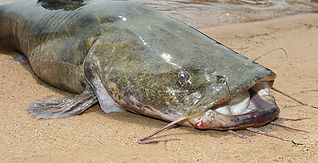
Out here we see three main kinds — blue cats, channel cats, and flatheads (most folks call ’em yellow cats). The blues are the big brutes, thick and gray with shoulders like a linebacker — some topping a hundred pounds in these rivers. Channel cats are the ones most folks grew up catching — smaller, scrappy, and some of the best eating fish you’ll ever fry. Then there’s the flathead, the bully of the bunch, wide-headed and mean, always looking for a live bait to crush.
Catfish do most of their feeding after dark. That’s when the river comes alive — the air still, the crickets loud, and your line just sitting there waiting to jump. You’ll hear that drag start to sing, see the rod dip toward the water, and before you know it, you’re in a tug-of-war with something that feels like it’s anchored to the riverbed. That’s catfishing in Southeast Texas — slow, quiet, and then sudden chaos.
🌊 Where We Find ‘Em
Catfish thrive all across our waters — Lake Livingston, the Trinity River, and even down toward the bays.
-
Lake Livingston: Deep channels and brush piles hold some monster blues and flatheads.
-
Liberty River: Twisting, muddy, and full of hidden holes. Perfect for channel cats and the occasional big yellow.
-
Bay & Backwater Areas: The mix of fresh and brackish water brings in smaller, feisty cats — great for steady action and fun fights.
-
They love current breaks, downed trees, and deep holes — spots where they can ambush food and stay cool.
🎣 Types of Catfish in Southeast Texas
Texas waters are home to a few different catfish species, each with its own look, attitude, and fight. You’ll find all three in the rivers and lakes we fish — and knowing which is which helps you appreciate just how diverse these waters really are.
Here’s how you tell them apart:
Blue Catfish
Biggest and strongest, heavy-body, bluish-gray, common over 50 pounds

Channel Catfish
Classic Texas cat, slender & forked tail, perfect for steady action

Flathead Catfish
Broad-headed and mean, golden-brown, powerful, fights hard for live bait
🤝 Handling & Releasing
Catfish are tough, but they’ve got some tricks. Those spines near their fins can sting if you grab them wrong, so we always show folks how to handle them safely.
We’ll clean your fish at the end of the trip if you’d like to take a few home — nothing beats fresh catfish fillets fried up that same night. But we also practice selective harvest, keeping eaters and releasing the big old breeders so the river keeps producing year after year.

🌱 Conservation: Protecting our Catfish for the Next Generation
Catfish are tough, no doubt about it — but even the strongest river fish have their limits. A big blue cat that tips the scales at 60, 70, or even 100 pounds didn’t get there overnight. That fish has likely been in the river for 20 to 30 years, surviving floods, droughts, and everything else that swims. It’s not just a trophy — it’s a breeder, one of the few capable of producing tens of thousands of eggs during the short window when conditions are just right.
That’s why we ask folks to think twice before keeping those giants. They’re the backbone of the population — the ones that keep our rivers full of healthy blues and channels for years to come. Once they’re gone, they’re gone for good, and no amount of stocking can replace a fish that took decades to grow.
Smaller catfish, in that 2–10 pound range, are the best for eating — tender, clean, and quick to replenish. The big ones are meant to be admired, photographed, and let go to swim another day. Watching a 60-pounder glide back into the current is one of the most rewarding sights you’ll see on the water.
We promote:
-
Catch, clean, and release — take what you’ll eat, let the rest go.
-
Respect for spawning seasons — especially in spring and early summer when they’re guarding nests.
-
Handle with care — keep them wet, support their weight, and never drag them through the mud.
-
Leave the river better than you found it — trash, lines, and bait wrappers don’t belong in the water.
Every big fish you release keeps the river strong for the next trip — and maybe, years from now, that same fish will give another angler the fight of their life. That’s what true conservation looks like on the Texas riverbank.
🌅 The Spirit of the River
Catfishing isn’t about speed or flash — it’s about slowing down and soaking in the moment. The quiet hum of the water, the smell of bait, the sound of crickets, and that sudden thunk on the line that makes your heart jump.
It’s sitting with friends on a muddy bank at midnight, lantern glowing, coffee in hand, waiting for that next run. It’s the feeling of a line going tight and the river coming alive.
When you’re out here, you’re not just fishing — you’re part of something timeless. The same rivers, the same species, the same fight that’s been happening for generations.
That’s what catfishing in Texas is all about.